DEPARTMENT OF PRECLINICAL RESEARCH
- Home
- Research
- Scientific Departments
- DEPARTMENT OF PRECLINICAL RESEARCH
-78840ae271cc793157be2b6132e096b1.jpg)
The DEPARTMENT OF PRECLINICAL RESEARCH participates in the programme “Molecular and Cellular Immunity Studies in Biological Models at in vitro and in vivo Conditions”. The aim of this program is to develop the individualized therapy technologies based on the investigation of molecular and cellular immunity mechanisms in vitro and in vivo biomodels. Theme: “Biomodels and their Application in the Study of the Immune Processes”.
Studies on the biology, medicine, toxicology, the development of immunology, virology as well as pharmacology are carried out in in vitro and in vivo biomodels. Animal model – live organism is used to investigate normal biological processes, spontaneous and caused by different triggers pathological processes as well as new diagnostics. This department works to develop treatment technologies. All these branches of science use lab animals, such as transgenic β-actin-luc and Rag2 mice, BALB/c, DBA/2, CC57W, C57Bl/6J line inbred mice, Wistar clone rats, guinea pigs, rabbits, who are bred in our department. The quality of experiments depends on the animal genotype and phenotype; therefore constant genetic, clinical, hematological, immunological and biochemical tests are performed. Using the reciprocal isotransplantation technique, the genotype of the inbred animals is defined, the coefficient of inbreeding approximates is calculated and the line genealogy is being followed. Phenotypic evaluation is performed by randomly selecting the same age animals and determining the ratio of their mass and weight of separate organs. Besides, hematological and biochemical tests are carried out; the animal health state is always kept under control.
The DEPARTMENT OF PRECLINICAL RESEARCH not only supplies the experimental animals to Lithuanian scientific and educational organizations but also carries out scientific investigations.
The department staff consists of 11people, 7 of them are scientific researchers who have a lot of experience in the work with laboratory animals; 6 employees have finished the International FELASA C category courses and are licensed for this work.
At the department we perform the following:
- The studies of the influence of natural, synthetic, microbial and animal origin immunomodulators on the host immune response;
- Studies of aggressive inflammatory fibroblast interconnections in arthritis models;
- Studies on the properties and migration of adult stem cells;
- Experimental studies of carcinogenesis modulators;
- Phototherapy and photodynamic therapy applications for the management of inflammatory processes. Non-invasive procedure for the treatment of inflammatory synovial tissue is being developed using advanced photonic technologies;
- Research of new medical devices;
- New biomodels is being developed for research projects;
- Histological and immunohistochemical examinations.

- Supply of laboratory animals: BALB/c, DBA/2, CC57W, C57Bl/6J line inbred mice, Wistar clone rats and laboratory rabbits for the experiments;
- Production of monoclonal and polyclonal antibodies;
- Pre-clinical tests of chemical, biological preparations and medical devices;
- Pathology diagnostic services.
2026 metai
- Černiauskas, L., Palšytė, V., Aleknavičiūtė, G., Mazgelytė, E., Bikulčienė, I., Badarienė, J., Rinkūnienė, E., Arbačiauskaitė, S., Allelein, S., Karčiauskaitė, D. (2026). HDL-associated specific paraoxonase-1 activity is linked to atherogenic lipoprotein measures in a high cardiovascular risk population: a cross-sectional study. Antioxidants, 15(6), 731.
- Černiauskas, L., Aleknavičiūtė, G., Arbačiauskaitė, S., Mytzka, N., Allelein, S., Bikulčienė, I., Karčiauskaitė, D. (2026). High density lipoproteins and extracellular vesicles—distinct but overlapping circulating particles and their role in atherosclerosis. Frontiers in Cardiovascular Medicine, 13, 1831078.
2024 metai
- Bikulčienė, I., Baleišis, J., Mazgelytė, E., Rudys, R., Vosyliutė, R., Šimkūnaitė-Rizgelienė, R., Kaminskas, A., Karčiauskaitė, D. (2024). Impact of chronic psychological stress on platelet membrane fatty acid composition in a rat model of type 1 diabetes Mellitus. Lipids in Health and Disease, 23(1), 69.
- Baleišis J., Rudys R. (2024). Assessing the efficacy of a 100 ps Nd: YAG laser for tattoo removal in a minipig model. Journal of Biophotonics, 17(5), e202300440.
2023 metai
- Baleišis, J., Rudys, R. (2023). Microlesion healing dynamics in in vivo porcine skin after treatment with 1064 nm picosecond-domain Nd: YAG laser. Journal of Biophotonics, 16(4), e202200349.
- Baleišis, J., Rudys, R. (2023). Comprehensive examination of tattoo removal using a 150 ps Nd:YAG laser in a porcine model. Scientific Reports, 13(1), 13062.
- Aleksiuk, V., Baleišis, J., Kirdaitė, G., Uzielienė, I., Denkovskij, J., Bernotas, P., Ivaškienė, T., Mobasheri, A., Bernotienė, E. (2023). Evaluation of cartilage integrity following administration of oral and intraarticular nifedipine in a murine model of osteoarthritis. Biomedicines, 11(9), 2443.
2021 metai
- Bradūnaitė, R., Leonavičienė, L., Akramas, A., Vasiliauskas, A., Dumalakienė, I., Vilienė, R., Jonauskienė, I., Mackiewicz, Z., Leonavičiūtė-Klimantavičienė, M. (2021). The effect of complex herbal extract and methotrexate on suppressing adjuvant arthritis in rats. Veterinarski Arhiv, 91 (4), 411-425.
- Korabliovienė, J., Mauricas, M., Dumalakienė, I., Čaplinskas, S., Vilienė, R., Baleišis, J., Vyšniauskis, G., Chorostowska-Wynimko, J., Magelinskienė, G., Korabliov, P., Valiulis, A. (2021). BCG masking phenomena might depend on the species of Mycobacterium. Acta Microbiologica et Immunologica Hungarica, 68(1), 27-33.
Publications in other peer-reviewed scientific journals:
- Kalėdienė, L., Baz, M., Liubavičiūtė, A., Biziulevičienė, G., Grabauskytė, I., Bieliauskienė, R., Jovaišas, P., Jurjonas, N. (2021). Antiviral effect of honey extract Camelyn against SARSCoV-2. Journal of Advanced Biotechnology and Experimental Therapeutics, 4(3), 290-297.
2020 metai
- Liubavičiūtė, A., Ivaškienė, T., Biziulevičienė, G. (2020). Modulated mesenchymal stromal cells improve skin wound healing. Biologicals, 67, 1-8.
- Bradūnaitė, R., Leonavičienė, L., Akramas, L., Leonavičiūtė-Klimantavičienė, M., Vasiliauskas, A., Dumalakienė, I., Jonauskienė, I., Baleišis, J., Mackiewicz, Z. (2020). Anti-inflammatory and antioxidant effects of turmeric extracts in rat adjuvant arthritis. Veterinarski Arhiv, 90 (4), 393-402.
- Dementjev, A., Rudys, R., Karpicz, R., Rutkauskas, D. (2020). Optimization of wide-field second-harmonic generation microscopy for fast imaging of large sample areas in biological tissues. Lithuanian Journal of Physics, 60(3), 145-153.
2019 metai
- Kirdaitė, G., Leonavičienė, L., Bradūnaitė, R., Vasiliauskas, A., Rudys, R., Ramanavičienė, A., Mackiewicz, Z. (2019). Antioxidant effects of gold nanoparticles on early stage of collagen-induced arthritis in rats. Research in Veterinary Science, 124, 32–37.
- Akramas, L., Leonavičienė, L., Bradūnaitė, R., Vaitkienė, D., Vasiliauskas, V., Dumalakienė, I., Zabulytė, D., Normantienė, T., Jonauskienė, I. (2019). Methylsulfonylmethane alone ori n combination with thiocolchicoside modulate autoimmune disease in rats with adjuvant arthritis. Journal of the Hellenic Veterinary Medical Society, 70(2), 1561-1572.
- Kulvinskienė, I., Raudoniūtė, J., Bagdonas, E., Čiužas, D., Poliakovaitė, K., Stasiulaitienė, I., Zabulytė, D., Bironaitė, D., Venskutonis, P.R., Martuzevičius, D., Aldonytė, R. (2019). Lung alveolar tissue destruction and protein citrullination in diesel exhaust-exposed mouse lungs. Basic and Clinical Pharmacology and Toxicology, 125(2), 166-177.
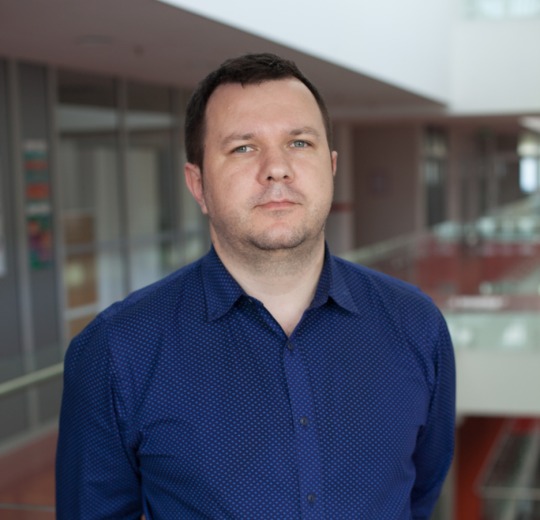
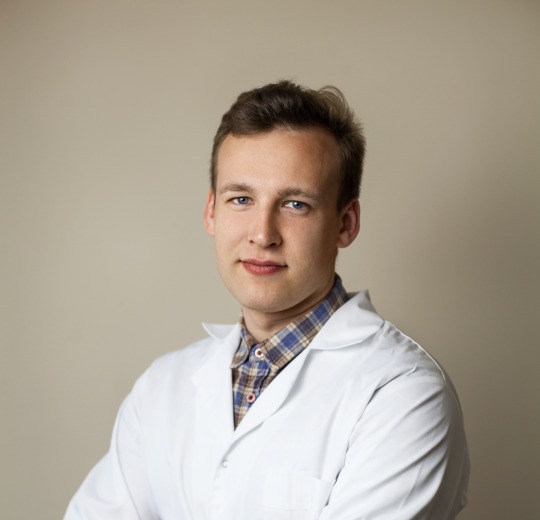
PhD Justinas Baleišis
Veterinary doctor, junior researcher, PhD student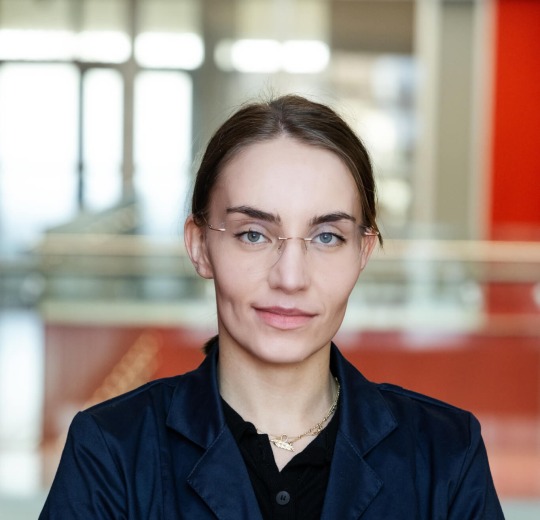
-8b9761ad1b60f86c534f36ee84bea6d1.png)
Jūratė Zarauskė
VeterinarianTeresa Normantienė
Senior biologist
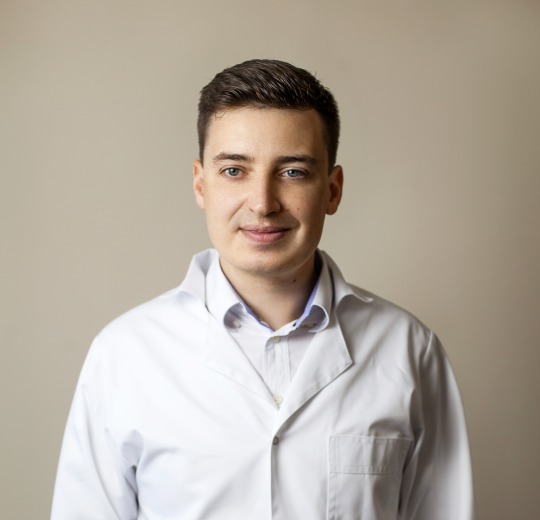
Simonas Lengvenis
Senior biologistJadvyga Liachovič
Laboratory technician